Although today Queenscliff is well known as a holiday location, it was not always so, and it has achieved this status over time. This seaside town has a rich history, and this history is also what makes many a tourists, visit it.
Well, before the Europeans first set foot to this seaside town, the Wathaurong People; a tribe from the Kulin Nation was already living there. The first European to live in the area was William Buckley, an escaped convict who befriended local aboriginals, and lived in the area for over 32 years from 1802 to 1835; he later lived in a cave at Point Lonsdale Lighthouse.
However, explorers from Europe first arrived in the area in 1802, led by Lieutenant John Murray, and Captain Matthew Flinders, who arrived a few months later. However, it was not until 1836 that permanent settlements began with the arrival of squatters in Whale Head, today known as Shortland's Bluff.
The sale of land also began in 1853, and it was the year that Queenscliff got the name it has, after Lieutenant Charles La Trobe, renamed it in honor of Queen Victoria.
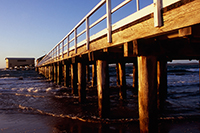
Although it was originally a fishing village, Queenscliff turned into a crucial cargo port, docking steamships trading at the nearby, Port Philip. The construction of the two lighthouses; High and Low Lights also played a key part in turning Queenscliff into an important trading location, with a life boat service, a pier and pilot service jetty meeting the needs of traders.
A tramway was installed around 1860, and the pier extended to hold bigger vessels, and it was also around this time that a huge number of immigrants arrived due to the gold rush. By 1879 a railway line from South Geelong was opened to service Fort Queenscliff. The Queenscliff branch was closed by the Victorian Railways in 1976. The section between Drysdale and Queenscliff was regauged in 1979 - 1980 by the Geelong Steam Preservation Society to create The Bellarine Railway, a heritage service which is now one of the major tourist attractions on the Bellarine.
Queenscliff also played an important role in the war, after a battery was made at Shortland's Bluff, and it was meant to defend Port Philip. Today, Fort Queenscliff is one of the main attractions in the area, and a museum with a detailed history makes part of the must see sights in this seaside town.
Visiting Queenscliff is best done on foot, and there are many places of interest to check out. For instance, Queenscliff Hotel dates back to 1888, whilst the old Lathamstowe Hotel dates to 1883. The Black Lighthouse is also another point of interest, since it was made from stones cut and numbered in Scotland way back in 1863.
In fact, while walking along the sandy beaches of Queenscliff, you may just stumble upon the mythical hidden treasure in Queenscliff. The treasure is said to belong to the Pirate Benito Benita, who hid it in a cave on the cliffs on Swan Bay, and then sealed in it with gun powder.
So, the history of Queenscliff is rich, and its heritage even richer, the sights are also amazing, and the things to do in the locality unique and exotic. It is the perfect holiday destination, for anyone seeking excitement with a dash of remarkableness.

Queenscliff.com.au is a dedicated travel website for Queenscliff, Victoria. Book accommodation, get special deals or find all necessary information to maximise your holiday experience.